I was born into a lower-income family, especially in the early years of my life. We weren’t struggling in a dramatic way, but we approached money carefully, and spending was thoughtful.
We lived in a small space where everything was shared. I didn’t get an allowance. I learned early on how to be frugal, not because anyone explicitly taught me how, but because I watched my parents live that way.
At school, that reality showed up in ways I didn’t talk about.
I remember not having money for food and asking friends for snacks. I remember walking home instead of taking the bus just to save a small amount. I didn’t go to birthday parties because I couldn’t afford gifts. I didn’t hang out after school because I had nothing to spend.
Looking back, I think that was part of why I struggled to make friends. It wasn’t just about personality. It was about not being able to participate.
At the same time, I was already dreaming.
I watched TV shows and imagined a completely different life. Bigger homes, nicer things, freedom. I even had those childish fantasies that maybe I secretly came from a rich family and one day they would find me. As unrealistic as that sounds, it reflected something real. I understood, very early on, that money meant options.
Over time, without me fully realizing it, my life started to change.
We moved into bigger homes. Opportunities appeared that I never thought I would have, like studying abroad and traveling. And slowly, my parents’ mindset shifted too. They were still responsible with money, but they started saying something very different.
As long as you’re happy, that’s what matters.
That idea stayed with me.
When I finally had access to money, I didn’t just spend. I overcompensated.
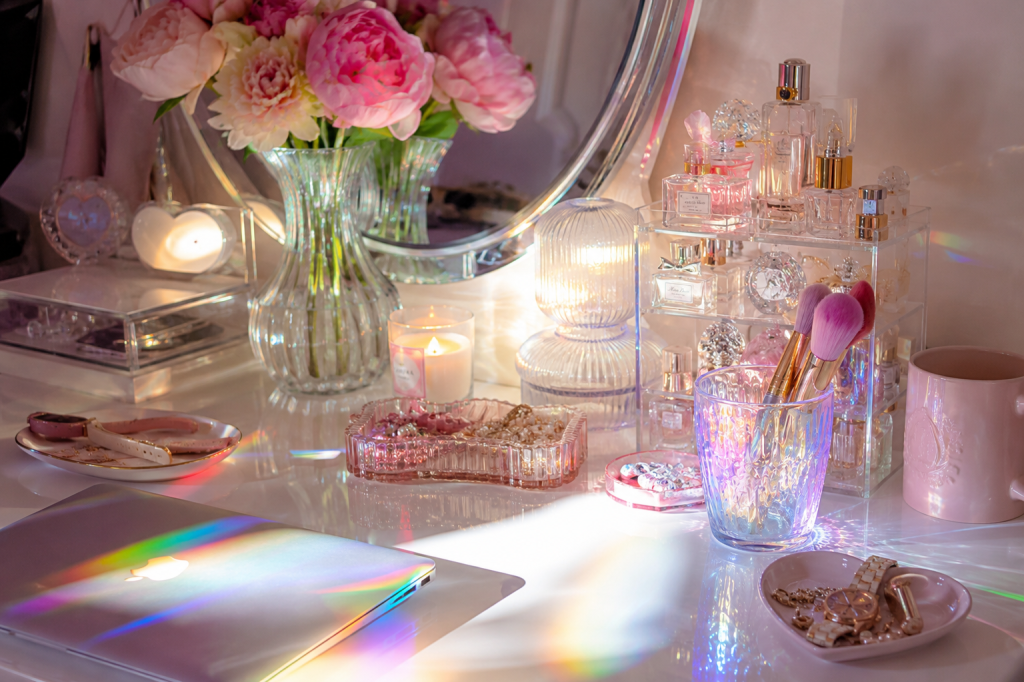
I bought things without looking at the price. I stocked up on makeup and skincare I didn’t need. There was a time I ate at restaurants every day. I ordered whatever I wanted, often the most expensive thing on the menu.
It wasn’t just spending. It was making up for everything I didn’t have.
And honestly, it made me happy.
That’s the part people don’t always want to admit. Money did bring me joy. It still does.
It’s not just about buying things. It’s about removing limits.
Money gave me something I didn’t have growing up. Space.
The space to choose what I eat, where I go, what I wear.
The space to say no to things that don’t feel right.
The space to avoid environments that would damage my self-esteem or go against my values.
I don’t have to drive myself anywhere. I can just get a ride whenever I need to. I don’t have to cook my own food, clean my own room, or worry about everyday chores.
I don’t have to force myself to finish something I don’t like. If I don’t enjoy a product, I can give it away or throw it out. I don’t have to think about every expense.
I can say yes to more things. And when I say no, it’s usually because I don’t actually want something, not because I can’t afford it.
I can buy things before I need them. I choose what I genuinely like, even down to small details, like the version with the cutest packaging instead of the one on sale.
At the same time, I’ve realized something about myself. I still have a strong sensitivity to small, tangible joys.
I can feel genuinely happy over something as simple as a really good bowl of ramen or a snack I’ve been craving. It doesn’t have to be expensive or impressive. Even something small, something affordable, can bring me a lot of joy.
And when someone gives me something, I don’t just see the object. I feel the intention behind it. The fact that they thought of me matters more than the material value. Gift giving is one of the ways I feel loved, and I’m very grateful that the people close to me show care in that way.
I’m also at a point where I can pause. I don’t feel the need to buy everything, especially things that feel excessive or disconnected from my life. I don’t need luxury for the sake of it. I don’t need to prove anything.
What matters more to me is whether something has real value in my life. Not just in the moment I buy it, but every time I use it or look at it.
If something brings me that kind of consistent, quiet happiness, then it’s worth it. If it doesn’t, I don’t need it.
I don’t buy things to impress people or to fit in. I’ve never really felt like I fit in anyway, so that stopped being a priority.
I just want to enjoy what I enjoy.
Whether it’s something simple like instant noodles or a fine dining meal, what matters is that I actually enjoy it. I pay attention to the experience. I savor it.
Money, to me, isn’t just about having more. It’s about being able to access those moments more freely.
If you asked me now whether money buys happiness, my answer would be yes, but not in the way people often think.
Money doesn’t solve everything. But it can remove a lot of suffering.
It can reduce anxiety.
It can create safety.
It can give you choices.
And sometimes, that’s the difference between surviving and actually living.
I’ve lived on both ends of the spectrum.
I know what it feels like to count every coin.
And I know what it feels like to not look at the price.
Somewhere in between those two extremes, I found balance.
I’m still grateful for abundance. I don’t take it for granted. But I’m no longer controlled by fear or by the need to prove anything.
At the end of the day, it’s not about having everything.
It’s about having enough, and knowing that it’s enough.
 Mindful Minion
Leave a comment