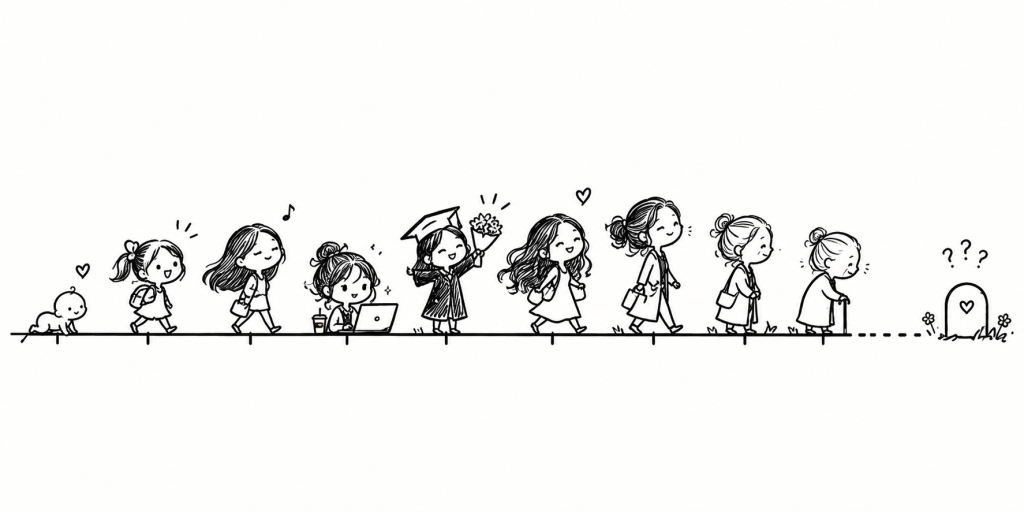
For at least the past decade, I’ve been very aware of death.
Not in a morbid way, but in a way that has genuinely helped me live better. Remembering that life is temporary has eased my anxiety, changed my priorities, and reminded me not to take everything so seriously.
There’s a Latin phrase for this: memento mori — remember that you will die.
Nobody knows when their time will come. Life won’t send us a calendar invitation asking whether we’re ready to leave. We don’t know how much time we have, and we certainly can’t take it for granted.
Once you truly understand this, something changes.
Stop Saving Everything for Later
I don’t want to save my favorite dress for a special occasion that may never come. I don’t want to keep the good food for tomorrow when I can enjoy it today. I don’t want to postpone every little pleasure until some imaginary future when everything is finally perfect.
If something brings me genuine joy and I can afford it, I’ll consider buying it. If I appreciate someone, I’ll tell them. If I owe someone an apology, I’ll make it rather than let my pride get in the way.
And if I need medical care to feel better, I’ll seek it instead of automatically putting it off.
Of course, living in the present doesn’t mean being financially irresponsible or ignoring the future. It’s about finding a balance between preparing for tomorrow and actually enjoying today.
I want to prepare for the future without sacrificing the present to it.
Because sometimes, impermanence means death. Other times, it means people drift apart, circumstances change, or opportunities disappear.
We don’t get to keep everything forever. So why not appreciate what we have while it’s here?
Every Day Is One Less Day
Every day that passes is one fewer day to spend with the people we love, explore the world, enjoy our favorite things, and experience the simple privilege of being alive.
We often treat ordinary days as disposable because we assume there will always be more.
Then life reminds us otherwise.
The COVID-19 pandemic showed us how quickly the world can change. People lost loved ones without the chance to say goodbye. The lives we once considered normal suddenly became impossible to maintain.
The ordinary life you’re living today is not something you’ll get to keep forever.
That isn’t a reason to live in fear. It’s a reason to pay attention.
The conversation you’re having, the meal you’re sharing, the people sitting beside you — none of it is guaranteed to last. And perhaps that’s precisely what makes it precious.
When Nothing Matters, What Actually Matters?
Remembering death also helps me worry less.
When I’m anxious, embarrassed, disappointed, or caught up in something unpleasant, I sometimes ask myself: Will this matter in the grand scheme of things?
One day, I’ll be gone. So will everyone else. Most of the things we’re obsessing over today will eventually be forgotten.
Who cares if I embarrassed myself in public? If someone rejected me? If I lost an argument or didn’t get the job I wanted?
Of course, our problems are real, and some deserve serious attention. But not every uncomfortable moment deserves days of rumination. Not every disagreement needs to be won. Not every person’s opinion deserves space in our minds.
We’re all going to die someday. We really don’t need to make every little thing harder than it has to be.
And here’s the beautiful thing about impermanence: it applies to suffering, too. Our worries change. Our circumstances change. Even the feelings that seem unbearable today will eventually shift.
I don’t have to let one bad day define my life. I don’t have to treat every setback as a permanent verdict on my worth.
Sometimes, I just need to remember that this, too, shall pass.
Live According to What Matters
Remembering death doesn’t make me want to live carelessly. It makes me more conscious of how I want to live.
I want to be generous because possessions won’t accompany me into the afterlife. I want to be kind because other living beings experience suffering, too. I want to prioritize my mental health because life is too short to spend every day convincing myself that I’m not good enough.
I want to spend less time chasing superficial approval and more time cultivating genuine contentment.
This is also why I care about spiritual development and reducing unnecessary suffering, including through my choice to eat plant-based food.
I don’t expect to become a perfect person. I simply want my actions to reflect my values.
I can’t control how long I get to live, but I can pay attention to how I choose to live.
And that means choosing kindness over cruelty, connection over pride, and meaningful joy over endless comparison.
Remember That You Will Die. Then Go Live.
I don’t think memento mori is meant to make us miserable about our mortality. I think it’s meant to wake us up.
Stop postponing happiness until you’re prettier, richer, more successful, or more accomplished. Stop letting pride prevent you from apologizing or expressing affection. Stop wasting precious hours trying to prove your worth to people who may not even remember what happened tomorrow.
Wear the dress. Eat the good food. Take care of your body. Call someone you miss. Give generously within your means. Spend time with people who make life feel lighter.
And when things go wrong, remember that your life is bigger than whatever is hurting you today.
We’re not here forever. Neither are the people we love. Neither are the circumstances we’re convinced will never change.
So let’s be kinder, more present, and a little less concerned with looking impressive. Let’s take our responsibilities seriously without taking our egos quite so seriously.
Remember that you will die, not to make life feel shorter, but to make the life you’re living feel more precious.
That’s memento mori to me.


Leave a Reply