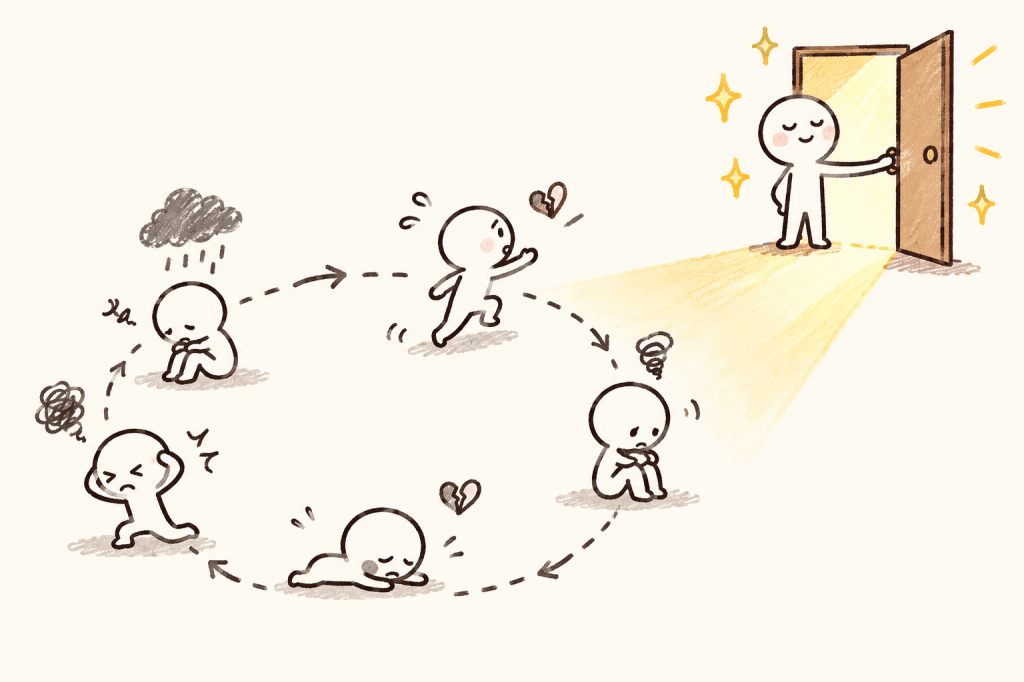
I’ve realized that one of the most exhausting things we can do is try to save people from themselves.
Sometimes, we can see exactly what someone is doing wrong. We can see the negative patterns they’re repeating, the opportunities they’re wasting, the toxic relationships they’re chasing, and the unnecessary suffering they’re creating for themselves.
And we want to help.
We explain. We advise. We persuade. We find a hundred different ways to say the same thing, hoping that if we just explain it well enough, they’ll finally understand.
But sometimes, they don’t.
And sometimes, even when they ask for our advice, they have absolutely no intention of taking it.
That’s when we need to learn to step back.
You can show someone the door, but you cannot make them walk through it.
Not Everyone Is Ready to Learn
I’ve learned that knowing something and being ready to understand it are two very different things.
I can tell someone that they’re chasing the wrong person, wasting their money, sabotaging their relationships, or making their own life unnecessarily difficult. I can explain why their choices aren’t working and suggest what they could do differently.
But if they’re not ready to hear it, my wisdom means nothing to them.
People change when they’re ready to change. Sometimes, they need to experience the consequences of their decisions before they understand what someone else could have told them for free.
Some lessons cannot be transferred. They have to be lived.
And as frustrating as that can be, it’s not my job to make everyone understand what I’ve learned.
Not every lesson I’ve learned is mine to teach, and not every person I care about is mine to save.
Their Choices Are Not My Responsibility
I have a tendency to fix things. When I care about someone, I want their life to get better. When I see a problem, I want to offer a solution.
But I’ve had to remind myself that caring about someone doesn’t give me responsibility for their decisions.
If someone keeps returning to a relationship that hurts them, I can listen without repeatedly explaining why they should leave.
If someone refuses to take care of themselves, I can encourage them without becoming their personal life manager.
If someone insists on living with resentment, gossiping about others, or making choices that keep them miserable, I can disagree without turning their behavior into my personal project.
I can offer advice when it’s welcome. I can help when someone genuinely wants help. I can be compassionate without enabling harmful behavior.
But I cannot do the growing for someone else.
Their life is theirs to live. Their choices are theirs to make. Their lessons are theirs to learn.
And if their choices don’t directly harm me or violate my boundaries, I can let them make those choices without trying to control the outcome.
Stop Trying to Be Everyone’s Savior
Sometimes, we keep explaining because we want to believe that the right words will finally change someone’s mind.
Sometimes, we confuse helping with controlling. We tell ourselves we’re doing it out of love, but underneath that love is the frustration of watching someone make a decision we wouldn’t make ourselves.
We want them to understand. We want them to improve. We want them to stop suffering.
But what if they’re not ready?
What if they need more time, a different experience, or a lesson we simply cannot give them?
I can lead a horse to water, but I cannot make it drink.
And if even the greatest teachers in history couldn’t make every person wise, kind, or enlightened, what makes me think I can fix everyone with a few conversations?
I don’t need to take someone’s resistance personally. I don’t need to keep repeating myself to prove that I care.
Sometimes, the most respectful thing I can do is leave the door open and let them decide whether to walk through it.
Let People Choose Their Own Suffering
This isn’t about being cruel or wishing suffering upon anyone. It’s about accepting that people have the freedom to make choices I don’t understand, even when those choices make their lives harder.
I can wish someone well without agreeing with them. I can love someone without approving of their decisions. I can hope they find a better path without dragging them toward it.
And I can redirect the energy I’ve been spending trying to fix others toward something I actually have more control over: myself.
My own habits. My own choices. My own peace. My own growth.
I don’t have to abandon people to stop trying to rescue them. I just have to stop making their lives my responsibility.
People will learn when they learn. Some will change. Some won’t. Some will eventually understand what we tried to tell them, and others may never understand it at all.
That’s life.
I can remain kind, offer help when it’s wanted, and trust people to find their own way.
And if they choose to keep walking in circles, I don’t have to walk in circles with them.
Let people choose their own suffering. Let them learn their own lessons. And give yourself permission to live your own life.


Leave a Reply