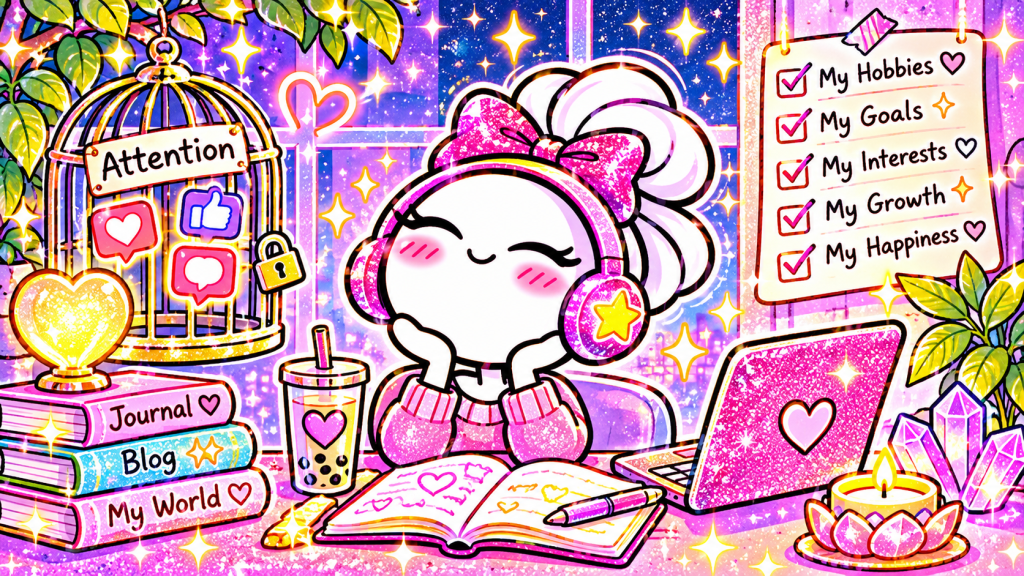
For most of my life, I’ve been an attention-seeking person.
I’ve struggled with insecurities and the feeling that I wasn’t quite enough. As a result, I constantly looked outside myself for validation, recognition, reassurance, and affection. I wanted to be noticed, appreciated, admired, and acknowledged.
And honestly, attention can be incredibly addictive.
Every compliment, enthusiastic response, and sign of approval gives us a little emotional boost. But the feeling never lasts. Eventually, we want more. We become increasingly concerned with how people perceive us, whether they notice us, and whether we’re interesting or impressive enough to hold their attention.
Before we realize it, we’re spending an enormous amount of energy trying to be seen.
The problem is that not everything we find interesting will be equally fascinating to other people. Our little achievements, experiences, worries, and daily discoveries might mean the world to us, but that doesn’t mean everyone else wants to hear about them.
People have their own lives, interests, problems, and emotional limitations. They cannot constantly pay attention to us.
And when we keep pushing ourselves into other people’s attention, constantly talking about ourselves, seeking reassurance, and demanding emotional engagement, we can eventually become exhausting to be around. We might even turn someone’s initial affection into frustration or disinterest.
Worse, we start compromising ourselves just to remain interesting. We might exaggerate stories, say things impulsively, or even lie to impress people. We might tolerate unhealthy relationships simply because they provide occasional attention.
The more attention we seek, the more dependent we become on receiving it. And the more dependent we become, the less attention ever feels like enough.
I’m not going to pretend that I’ve become completely confident or that I no longer care what anyone thinks of me. But I’ve noticed a significant change over the years. I’ve become much less interested in seeking attention, largely because I’ve learned to redirect that attention back to myself.
Here are a few things that have helped me.
1. Get a Life of Your Own
One of the biggest reasons people become addicted to attention is that they spend too much time looking outward and not enough time building a life of their own.
When you don’t have enough personal interests, hobbies, passions, or goals, it’s easy to make other people’s attention the main source of excitement in your life.
So, get busy.
Explore your interests, develop hobbies, learn something new, pursue personal projects, and work toward goals that matter to you.
It doesn’t matter whether these activities seem meaningful or impressive to anyone else.
As I’ve grown older, I’ve become much clearer about who I am, what I want, what I value, and the kind of person I want to become. I have my own little world of interests and activities that keep me occupied and make me happy.
And honestly, I don’t need anyone else to find them interesting.
The more invested you become in your own life, the less desperate you become for other people’s attention.
2. Give Yourself an Outlet, Not an Audience
I think everyone should have some form of personal outlet, whether it’s a private journal, a diary, or an online blog.
For me, this blog has become one of the most meaningful outlets in my life.
Whenever something happens during the day, whenever I have an interesting thought, a new idea, or something that’s been bothering me, I can simply write about it.
I can put my anxiety, frustrations, questions, dreams, plans, and random observations into words. Writing helps me organize my thoughts, process my emotions, and make sense of what’s happening inside my head.
And the best part? I don’t have to depend on anyone else.
I don’t have to wonder whether someone is available to listen, whether they’ll understand me, or whether they’ll respond in the way I need. I don’t have to worry about being judged or receiving unsolicited advice.
Sometimes it’s two in the morning and I suddenly have something on my mind. I can just open my journal and write.
Not every thought that’s fascinating to me will be equally interesting to someone else. That’s perfectly fine.
Whether anyone reads my blog or not, I’ve already had the opportunity to express myself freely.
The purpose of having an outlet isn’t necessarily to be heard. Sometimes, it’s simply to have somewhere to put everything you carry inside.
3. Stop Auditioning for Other People’s Attention
People with attention-seeking tendencies can put enormous pressure on themselves in social situations.
Especially in group conversations, there’s often an unconscious desire to say something interesting, funny, impressive, or entertaining. We want people to notice us, respond enthusiastically, and think we’re worth listening to.
We start performing instead of simply existing.
What has helped me is learning to step back.
I don’t have to contribute to every conversation. I don’t have to be the funniest person in the room or the one who always has something clever to say.
Sometimes, I can simply withdraw.
I can sit quietly while everyone else talks. I can focus on my surroundings, play with a fidget toy, quietly recite my Buddhist prayers, or let my mind wander somewhere else.
I don’t even have to actively listen if the conversation doesn’t interest me.
I also don’t have to force myself to attend every party or social gathering. If I don’t genuinely want to go, I can simply decline.
Why voluntarily put yourself in situations where you feel pressured to perform for other people?
You don’t have to audition for a place in everyone’s attention. Sometimes, you can just exist without trying to be noticed.
4. Learn to Enjoy Things Without Needing to Share Them
Develop interests that are entirely your own.
You might enjoy things that nobody in your social circle particularly cares about. Your hobbies, preferences, and passions might be completely different from those of the people around you.
And that’s perfectly fine.
You don’t need to convince people that your interests are fascinating, explain why they’re meaningful, or seek approval for the things you enjoy.
You can simply enjoy them.
Try shopping alone, attending workshops alone, visiting places alone, or having experiences that don’t involve your usual social circle.
There’s something wonderful about discovering that you can have a fulfilling experience without needing someone else to witness it.
Your interests don’t need an audience, and your happiness doesn’t need unanimous approval.
Take Your Attention Back
I think the desire for love, affection, recognition, and appreciation is perfectly human. There’s nothing wrong with wanting to feel valued.
But there’s a difference between enjoying attention and depending on it.
When your happiness depends too heavily on how other people perceive you, you give them an enormous amount of power over your emotional well-being.
And there’s another side to attention that we often overlook: the more visible we become, the more opportunities there are for people to misunderstand us, scrutinize us, or involve us in unnecessary drama.
Attention isn’t always a reward. Sometimes, privacy and peace are much more valuable.
I’ve also learned that constantly unloading our emotions onto other people can become exhausting for both sides. Everyone has limited time and emotional capacity. We don’t need to turn every difficult feeling into someone else’s responsibility when we can journal, reflect, or simply give ourselves time to process it.
I’ve learned this through experience: sometimes, seeking comfort from others leaves me feeling even more disappointed than before.
Ultimately, I want to become emotionally independent. I want to be able to enjoy my own company, validate my own experiences, and feel good about myself without constantly needing someone else to confirm my worth.
I’m still a work in progress, but I know where I want to direct my attention: my interests, my goals, my little pleasures, my personal growth, and my inner peace.
Because attention is temporary. Approval is unpredictable. And the pleasure of being noticed can become an endless cycle of wanting more.
I’d rather pursue knowledge, cultivate inner peace, and build a life I genuinely enjoy than spend my days chasing little dopamine hits from other people’s attention.
Life is ridiculously short.
Stop chasing attention. Start building a life that keeps you interested.
You don’t need to be the center of someone else’s world when you can become the center of your own.


Leave a Reply